The Quick Answer
Latex mattresses sag more slowly than most foam beds because natural latex is highly resilient. When a latex mattress does dip, the cause is usually one of three things: a weak or uneven foundation, concentrated wear in one spot, or normal aging of the comfort layers after many years.
You can't truly "fix" a sagging mattress at home. You can, however, slow it down, make it more comfortable in the short term, and check whether the dip is deep enough for a warranty claim.
Sagging vs Normal Settling
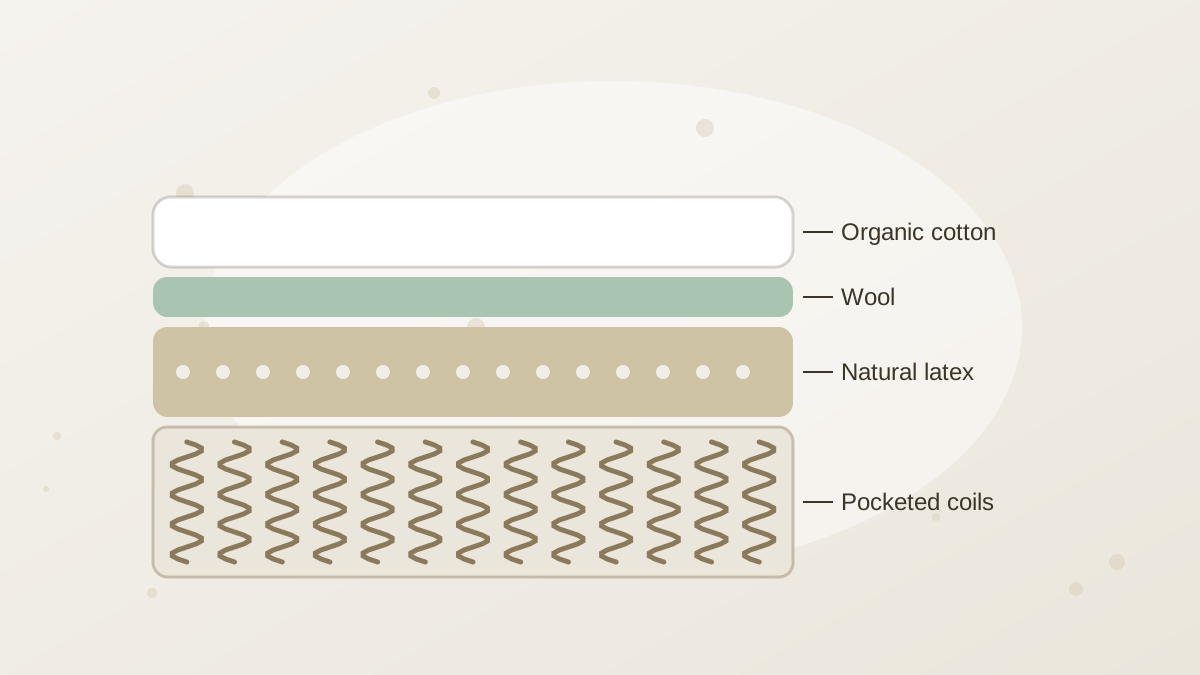
Every mattress changes a little in its first months. The top layers soften and conform slightly to your body. That's called settling, and it's normal. You might notice a faint impression where you sleep, but your spine should still feel supported.
Sagging is different. It's a dip deep enough to change your sleeping posture, often in the middle or where you sleep most. Signs include:
- Rolling toward the center or toward your partner
- Waking up with lower back stiffness that eases once you're up
- A visible dip when the bed is stripped
- Feeling "in a hole" rather than on the mattress
What Causes a Latex Mattress to Sag?
An Unsupportive Foundation
This is the most common cause on latex beds and one people often miss. Latex mattresses are heavy. A queen Eco Terra weighs about 100 pounds before you add two sleepers. Slats that are too far apart, a missing center support leg, or a worn-out box spring can let the mattress bow.
Eco Terra's warranty requires a frame that supports the head, foot and sides with rigid center support. Without a metal center support, it calls for at least five hardwood slats (1x4). Our foundation guide covers this in detail.
Sleeping in the Same Spot
If you always sleep in the same place, those areas take more pressure night after night. Over years, that can create body impressions.
Age and Normal Wear
Latex resists breakdown better than polyfoam, but all cushioning materials soften with long use. In a hybrid, coils can also slowly lose some tension over many years.
Moisture or Heat Damage
Spills that soak in, or storage in hot, damp conditions, can degrade latex and wool. A protector and good airflow help prevent this.
Lower-Density or Blended Materials
Mattresses that rely on low-density polyfoam or thin latex layers tend to sag sooner. Higher-quality natural latex is more durable.
Where the Sag Shows Up Tells You a Lot
The location of a dip is a useful clue to its cause:
- A dip down the center of a queen or king often points to missing or weak center support in the frame.
- Dips where each person sleeps are usually body impressions from regular use.
- Sagging along one edge can come from sitting on the same spot every day, or from weak edge support.
- A dip that matches the gap between slats or a broken slat points straight at the foundation.
- A dip that moves when you move the mattress to another base is the foundation, not the mattress.
That last test is one of the most useful. If you can, put the mattress on the floor for a night or two. If the sag disappears, your base is the problem.
How to Measure a Sag
- Strip the bed of sheets, toppers and protectors.
- Lay a straight edge across the mattress, such as a broom handle, yardstick or taut string.
- Measure the gap between the straight edge and the deepest part of the dip.
- Check several spots, including where you and your partner sleep.
- Take photos with the tape measure visible if you plan to file a warranty claim.
Table: What a Sag Measurement Usually Means | Depth | What It Suggests | Next Step | |---|---|---| | Under about 0.75" | Normal settling | Rotate; check the foundation | | About 0.75"–1.5" | Noticeable wear, often within normal limits | Rotate; consider a topper; check the base | | Over 1.5" | Possible defect under Eco Terra's warranty threshold | Document and contact Eco Terra |
Warranty thresholds vary by brand, so check your own warranty terms. Our warranty guide explains how impression limits work.
Short-Term Fixes That Actually Help

Check and fix your foundation. Add center support legs, replace broken slats, or add slats so gaps are narrower. If the base is the problem, fixing it may resolve the sag entirely.
Rotate the mattress head to foot. This spreads wear across different areas. Our rotation guide explains how often.
Add a topper. A topper can make a minor dip feel less noticeable, but it won't restore support. Our topper vs new mattress guide explains the limits.
Use a pillow under the lower back or hips as a temporary posture aid while you decide next steps.
Change where you sleep on the bed occasionally to avoid concentrating wear.
How to Prevent Sagging From Day One
Prevention is much easier than repair. These habits help a latex mattress keep its shape:
Start With a Proper Base
Use a solid platform or slats spaced closely enough for your warranty, with center support legs on queen and king frames.
Use a Protector
Moisture is one of latex's weak points. A breathable waterproof protector keeps spills and sweat out.
Rotate Occasionally
Turning the mattress head to foot every few months spreads wear more evenly.
Avoid Sitting on the Same Edge
Daily sitting in one spot compresses that area faster.
Don't Stand or Jump on It
Eco Terra's warranty warns against standing or jumping on the mattress.
Move It Carefully
Don't bend or fold a latex mattress. Our moving guide explains how to handle it.
What Doesn't Help
- Flipping a one-sided mattress. The Eco Terra hybrid is single-sided, so flipping puts the coils on top.
- Putting plywood under a sagging mattress without fixing the real foundation issue. It can help an old box spring short-term, but it may also reduce airflow underneath latex.
- Stuffing towels or pillows under the cover. This creates uneven support and can damage the mattress.
How Long Before a Latex Mattress Sags?
Latex is among the most durable mattress materials. Many sleep sites estimate latex beds last longer than memory foam and polyfoam mattresses, often 10 years or more for well-made natural latex. A latex hybrid's lifespan also depends on its coil unit and how well the foundation supports it.
Our lifespan guide breaks down what affects longevity.
Making a Warranty Claim
If your mattress sags beyond the warranty limit:
- Measure and photograph the impression with no bedding.
- Photograph your foundation to show it meets the requirements.
- Keep your receipt and the law label attached to the mattress. Eco Terra requires both.
- Contact the manufacturer. Eco Terra support can be reached at 1-888-997-4009.
- Follow their instructions, which may include an inspection.
Eco Terra's warranty is non-prorated for 15 years. If a defect is confirmed, it repairs or replaces the mattress at its discretion.
When to Replace a Sagging Mattress
Replace it when the sag affects your sleep or causes pain, when it's outside warranty, or when fixes no longer help. If you're replacing a sagging foam bed, a latex hybrid is worth a look for durability.
Replacing a sagging mattress? Check today's Eco Terra price on the official site.
Latex Mattress Sagging FAQ
Do latex mattresses sag?
They can, but usually more slowly than foam mattresses. Foundation problems are a common cause of sagging on latex beds.
How much sagging is normal?
Light settling is normal. Eco Terra's warranty treats impressions of 1.5 inches or less as normal wear.
Can you fix a sagging latex mattress?
You can't fully restore it at home, but fixing the foundation, rotating and adding a topper can help in the short term.
Does the Eco Terra warranty cover sagging?
It covers body impressions deeper than 1.5 inches as a defect, if the mattress was on a proper foundation and other terms are met.
Can a bad bed frame cause sagging?
Yes. Weak slats, wide gaps or missing center support can let a heavy latex mattress bow and can also void warranty coverage.