The Short Answer
Some mattresses, mostly budget foam beds, use fiberglass as a fire barrier because it's inexpensive and helps them pass federal flammability tests. It's usually woven into an inner layer, sometimes called an "inner sock," under the outer cover.
Fiberglass is generally considered a concern mainly when the cover is removed, torn or washed, because tiny glass fibers can then escape and irritate skin, eyes and airways. Many shoppers prefer to avoid it entirely. You can do that by choosing a mattress that clearly names a non-fiberglass fire barrier, such as wool, and by checking the law label and certifications.
Why Fiberglass Is Used in Mattresses
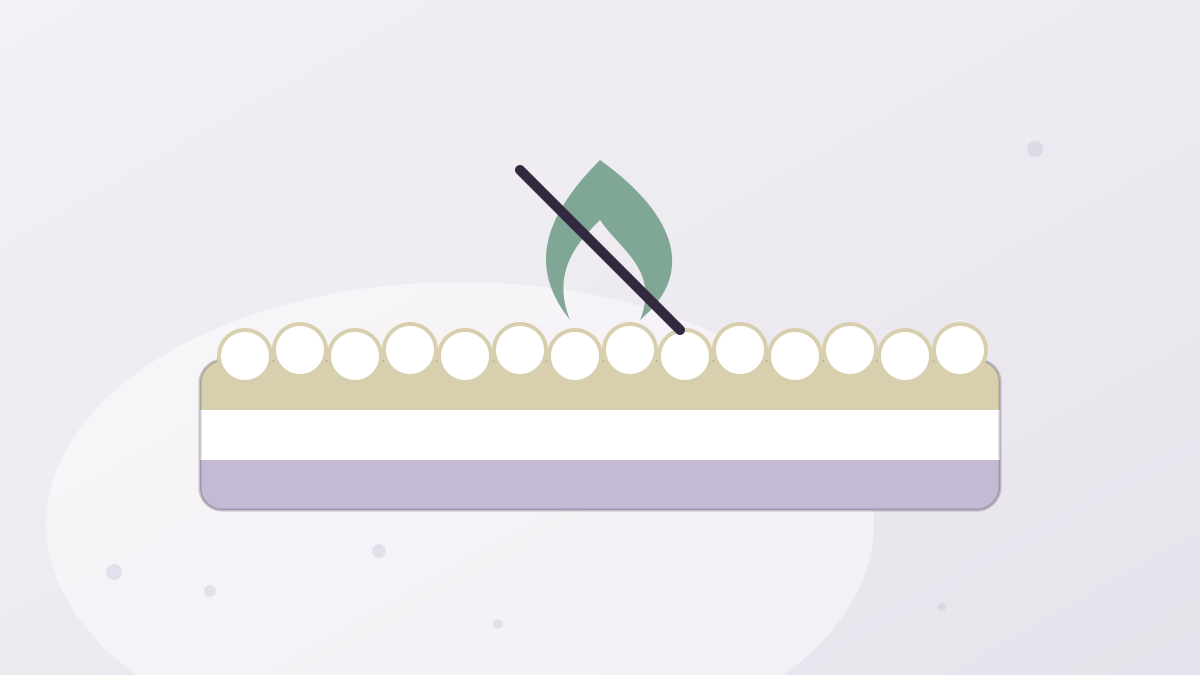
Every mattress sold in the US must pass a federal open-flame test (16 CFR 1633), designed to slow the spread of fire. Foam is flammable, so foam-heavy mattresses need some kind of barrier.
Manufacturers can meet the rule several ways: chemical flame retardants, natural fibers like wool, treated plant-based fibers, or fiberglass. Fiberglass is popular in low-cost beds because it's cheap and works by melting into a barrier that smothers flames. That's why it's more common in budget mattresses than in premium or natural ones.
Why People Worry About Fiberglass
Fiberglass is made of extremely fine glass fibers. When it stays sealed inside a mattress, it isn't in contact with you. The concern comes when fibers escape, which can happen if:
- The outer cover is removed, even if it has a zipper
- The cover is washed, which can damage the inner layer
- The cover tears, wears thin or is cut
- The mattress is damaged during a move or disposal
Escaped fibers can spread through a room and settle on bedding, clothing and furniture. People report skin itching, eye irritation and respiratory discomfort from exposure. Cleaning up fiberglass contamination can be difficult and expensive.
How to Tell If a Mattress Has Fiberglass
Check the law label. Every mattress has a tag listing its filling materials. Look for terms like "glass fiber," "glass wool," "fiberglass" or sometimes vague terms like "silica" combined with other fibers. A label might also list a percentage of "other fibers," which you can ask about.
Look for warnings. Labels or covers that say "do not remove cover" or "do not wash cover" can be a clue, though they're not proof.
Read the specifications. Check the brand's product page or FAQ for the fire barrier material.
Ask the brand directly. Ask: "What material do you use as your fire barrier, and does any part of the mattress contain fiberglass?" A clear, specific answer is a good sign. A vague one isn't.
Check certifications. Some finished-product certifications, such as GOTS for a finished mattress, restrict fiberglass as a condition of certification. Material-only certifications don't cover the fire barrier.
Table: Law Label Terms and What They May Mean | Label Term | What It May Indicate | |---|---| | Glass fiber / glass wool / fiberglass | Contains fiberglass | | Silica | May be part of a fire barrier; ask the brand | | Rayon (treated) | Plant-based fire barrier fiber | | Wool | Natural fire barrier | | Modacrylic | Synthetic flame-resistant fiber | | "Other fibers" | Ask what they are |
Fiberglass Alternatives

Wool. Naturally flame resistant thanks to its structure and moisture content, wool chars rather than igniting easily. It's common in natural and organic mattresses and also helps with temperature and moisture. Our wool fire barrier guide explains how it works.
Treated rayon or plant-based fibers. Fibers made from wood pulp, sometimes with added silica, can form a flame barrier. Some brands describe these as "chemical-free," though treatments vary, so ask for details.
Thistle and other plant fibers. Some brands use natural plant fibers combined with small amounts of binding material.
Chemical flame retardants. Effective, but many shoppers prefer to avoid added chemicals.
Wool is the most common choice in natural latex mattresses because it pairs well with organic cotton covers and natural latex.
Does Latex Need a Fiberglass Barrier?
No. Latex mattresses still need to pass flammability testing, but natural latex beds commonly use wool to do it. Because latex shoppers often prioritize natural materials, most natural and organic latex brands avoid fiberglass.
Be careful with very low-cost "latex" mattresses, though. A bed with a thin latex layer over polyurethane foam may use the same fire barriers as budget foam mattresses. Always check the fire barrier, not just the comfort layer.
What to Do If Your Mattress Contains Fiberglass
If you already own a mattress with fiberglass, it isn't an emergency, as long as the cover is intact. Practical steps:
- Never remove or wash the cover, even if it has a zipper.
- Add a tightly woven, zippered mattress encasement for an extra barrier.
- Inspect the cover regularly for tears, thin spots or holes.
- Be careful when moving it, so the cover doesn't snag or rip.
- Plan a careful disposal when it's time to replace it, keeping the cover sealed. Our mattress disposal guide explains options.
What to Do If Fiberglass Has Escaped
If the cover has been removed or damaged and you suspect fibers have spread:
- Stop using the mattress and keep the area closed off.
- Avoid shaking bedding or clothing, which can spread fibers further.
- Don't use a regular vacuum without a HEPA filter, as it can push fibers into the air.
- Consider professional cleaning, especially for widespread contamination.
- Seek medical advice if you have persistent skin, eye or breathing irritation.
- Contact the manufacturer about the issue and any warranty or support options.
Questions to Ask Before You Buy
- What material is your fire barrier?
- Does any layer, cover or component contain fiberglass or glass fiber?
- Is the cover removable, and is it safe to wash?
- Which certifications cover the fire barrier, if any?
- Can you share the law label details?
Brands with nothing to hide usually answer these quickly.
Fiberglass-Free Latex Mattresses

Many natural latex brands use wool or other natural fire barriers, and several state outright that their mattresses are fiberglass-free. Examples include:
- Eco Terra Hybrid Latex, which names a GOTS organic wool fire barrier and lists only latex, wool and cotton on its law label
- Avocado Green, with GOTS finished-product certification
- Birch Natural, which says it uses no polyurethane foam or fiberglass
- Awara, which describes its hybrids as fiberglass-free
- Saatva Latex Hybrid, with a New Zealand wool fire barrier
- PlushBeds Botanical Bliss, with organic wool
Always confirm current details with the brand before buying, since materials can change. Our best non-toxic mattress guide compares several of these.
Fiberglass in Mattress Toppers and Covers
Fiberglass isn't limited to mattresses. Some low-cost mattress toppers and replacement covers use fiberglass fire barriers too, especially foam toppers. If you're buying a topper to soften a natural mattress, check its fire barrier and law label as carefully as you'd check a mattress.
Natural latex and wool toppers usually avoid the issue, because wool provides natural flame resistance. Eco Terra's latex topper is described as certified organic latex with no synthetics or fillers, and its wool topper is made from virgin wool and organic cotton. Our best latex topper guide compares options.
Disposing of a Mattress That Contains Fiberglass
When it's time to replace a mattress with a fiberglass barrier, take care not to release fibers during removal. Keep the cover on and intact, wrap the mattress in a heavy plastic mattress bag, and avoid cutting or tearing it. Many recycling programs and haul-away services accept mattresses, but let them know if you're concerned about fiberglass. Our mattress disposal guide covers local options.
Why Fiberglass-Free Mattresses Cost More
Wool and other natural fire barriers cost more than fiberglass, and they're often paired with other premium materials like natural latex and organic cotton. That's one reason fiberglass is most common in budget mattresses.
The price gap has narrowed, though. A natural latex hybrid with a wool fire barrier, like the Eco Terra at about $1,014 for a queen in November 2026, costs less than many conventional premium mattresses. Our latex mattress cost guide breaks down prices by type.
Want a fiberglass-free mattress with a wool fire barrier? Check today's Eco Terra price on the official site.
Fiberglass-Free Mattress FAQ
How do you know if a mattress has fiberglass?
Check the law label for glass fiber or similar terms, read the brand's specifications, and ask what the fire barrier is made of.
Is fiberglass in a mattress dangerous?
It's generally considered a concern mainly if the cover is removed or damaged and fibers escape. Many shoppers prefer to avoid it.
Do latex mattresses have fiberglass?
Most natural latex mattresses use wool instead. Low-cost latex-over-foam beds may use other barriers, so check.
Does the Eco Terra mattress contain fiberglass?
Eco Terra names GOTS organic wool as its fire barrier, and its published law label lists only natural latex, wool and organic cotton as fillings. It also says it uses no chemical flame retardants. Ask Eco Terra if you want written confirmation.
Can you remove a mattress cover to wash it?
Not if the mattress contains fiberglass. Check the brand's care instructions first, and use a protector you can wash instead.