The Quick Answer
Latex mattresses have one of the shortest break-in periods of any mattress type. Many people notice the feel settling within a few days to a couple of weeks, and most have a clear sense of whether the mattress suits them within about a month.
Two things happen during break-in. The materials settle slightly, especially the cover, wool and the surface of the latex. And your body adjusts to a new surface, which often takes longer than the materials themselves, particularly if you're switching from memory foam or an old, sagging mattress.
What Changes During Break-In

The cover and wool soften. Quilted covers and wool fire barriers compress slightly as you sleep, which softens the very top of the mattress.
The latex surface loosens. New latex can feel a touch firmer at first. Natural latex is very elastic and doesn't change much overall, but the surface often feels slightly more forgiving after a few weeks.
Coils settle. In a hybrid, coils and the materials around them settle into their working shape.
Your body adapts. Muscles and joints get used to a different kind of support. This is often the biggest change of all.
Typical Break-In Timeline
Table: What to Expect in the First Month | Timeframe | What's Typical | |---|---| | Nights 1–3 | Feels new and slightly firm; you notice the difference from your old bed | | Week 1 | Surface starts to feel a little softer; body begins adjusting | | Weeks 2–3 | Feel settles; most early stiffness fades | | Week 4 | You can judge the mattress fairly |
Everyone is different. Heavier sleepers may notice the surface settle faster, while lighter sleepers may feel the change less.
Why Latex Breaks In Faster Than Foam
Memory foam softens with body heat and gradually molds to you, which can take weeks or months. Latex is elastic: it compresses and springs back immediately, so it doesn't need as long to "learn" your shape.
What latex newcomers often notice is the change in feel rather than a change in the mattress. If you've slept on memory foam for years, latex's buoyant push-back can feel firm at first simply because it's different. That's an adjustment, not a defect.
How to Help a Latex Mattress Break In
- Sleep on it every night. Consistent use helps it settle evenly.
- Move around on it. Spend time sitting, reading or lying in different spots, not just your usual sleep position.
- Rotate your position if you sleep alone, so you don't break in just one area.
- Keep the room comfortably warm. Latex doesn't depend on heat the way memory foam does, but a cold room can make any mattress feel firmer.
- Use your usual pillow. A new pillow and mattress together make it hard to judge either.
- Make sure your base is right. A weak foundation can make a mattress feel wrong.
Some guides suggest walking gently across a new mattress to speed up break-in. We'd skip that for a latex hybrid. Eco Terra's care guidance says not to stand or jump on the mattress, and it's not worth risking the coils or your warranty.
Normal vs Not Normal

Table: Break-In Changes vs Warning Signs | Normal During Break-In | Worth Investigating | |---|---| | Slightly firmer feel at first | Visible dips or sagging in the first weeks | | Mild natural scent that fades | Strong chemical smell that doesn't fade | | Some stiffness for a few days | Sharp or worsening pain | | Feeling the difference from your old bed | Lumps, gaps or areas that don't recover | | Surface softening a little | Coils you can feel through the surface |
If you notice anything in the right-hand column, check your foundation first, then contact the brand. Our latex sagging guide explains how to tell the difference between settling and a defect.
If It Still Feels Too Firm After 30 Nights
If a latex mattress still feels too firm after about a month, you have several options:
- Add a topper. A 2-inch soft or medium latex topper adds cushioning without changing support. Eco Terra's latex topper starts at $274 for a queen.
- Check your pillow. Side sleepers on firmer surfaces often need a slightly taller pillow.
- Exchange for a softer option, if the brand allows it.
- Return it within the trial if it's clearly the wrong fit.
Our too firm or too soft guide walks through each fix.
If It Feels Too Soft
Latex rarely feels too soft during break-in, since it doesn't soften much. If it does, the cause is usually:
- The wrong firmness for your weight or position, such as a heavier stomach sleeper on a Medium
- A flexing foundation, which makes the whole mattress feel softer
- A soft topper adding more cushioning than you need
Check the foundation first. If the base is solid and the mattress still feels too soft, a firmer model may suit you better.
Break-In and Your Sleep Trial
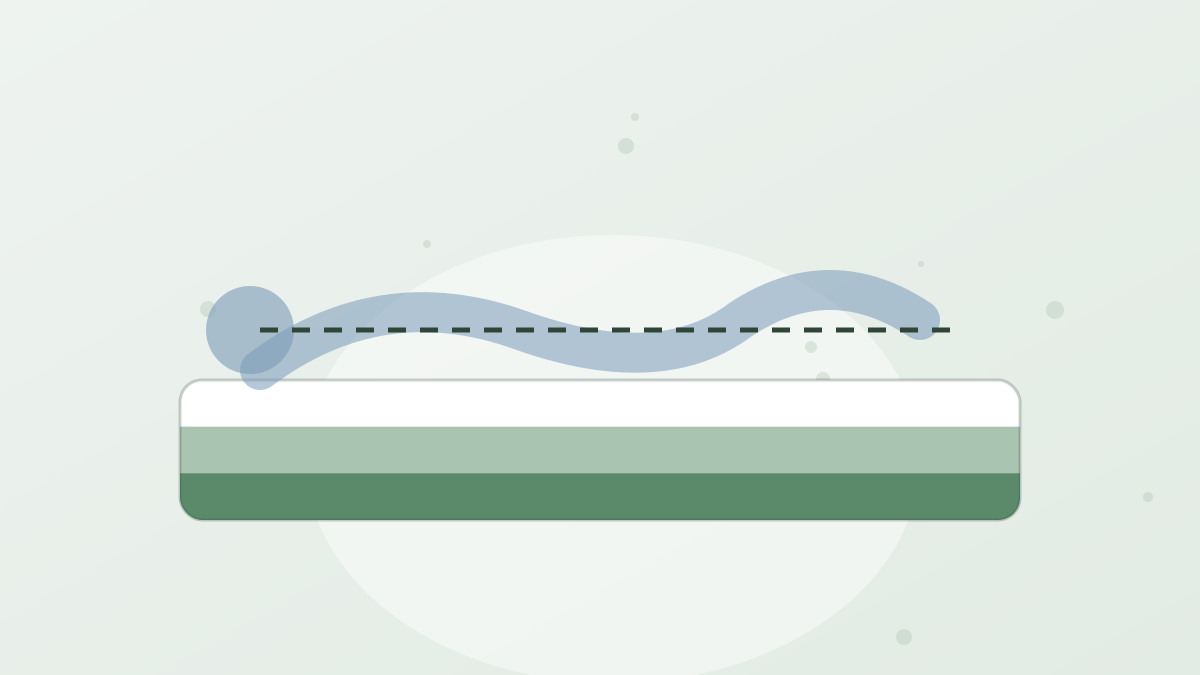
Most trials are designed with break-in in mind. Many brands, including Eco Terra, require around 30 nights before a return. That gives the mattress time to settle and your body time to adjust, which helps you make a fair decision.
Keep your trial dates in mind. Eco Terra's 90-night trial applies to direct purchases and starts at delivery. If you're unsure after 30 nights, keep sleeping on it for a few more weeks. You'll still have time to return it if needed. Our sleep trials guide explains the details.
Break-In When Switching From Memory Foam
If you're moving from memory foam to latex, expect the adjustment to feel bigger. Memory foam lets you sink in and molds slowly around you. Latex pushes back right away and keeps you on top of the surface. For the first week or two, many people describe latex as firmer or bouncier than they expected.
That difference usually becomes familiar, and many people come to prefer how easy it is to change positions on latex. If you're a side sleeper and the shoulder pressure doesn't ease after a few weeks, a soft latex topper is a gentle way to bridge the gap without giving up latex's support. Our latex vs memory foam guide explains the differences.
Break-In When Replacing an Old, Saggy Mattress
If your previous mattress was sagging, your body may have adapted to a poor sleeping posture. A supportive new mattress can feel strange at first, and you may even notice new aches for a few nights as your body adjusts to better alignment.
This usually fades within a week or two. If discomfort continues or gets worse beyond a few weeks, consider whether the firmness is right for you, and talk to a professional about persistent pain.
Keep a Simple Sleep Log
A short sleep log makes it much easier to judge a new mattress fairly. Each morning for the first month, jot down:
- How rested you feel, on a scale of 1 to 5
- Any aches or stiffness, and where
- Whether you woke up hot
- How often you woke during the night
- Anything unusual, like a late meal, alcohol or a different pillow
After a few weeks, patterns become clear. If most mornings improve, the mattress is likely working. If the same problem shows up night after night, you'll know exactly what to fix or mention to the brand.
Break-In for Couples
Couples often break in a mattress unevenly, because each partner sleeps in the same spot every night. That can create two slightly softer zones with a firmer middle. Rotating the mattress head to foot occasionally helps even it out. Our rotation guide covers how often.
Choosing between Medium and Medium-Firm? Check today's Eco Terra prices on the official site.
Latex Mattress Break-In FAQ
How long does it take to break in a latex mattress?
Many people notice it settling within a few days to two weeks. Give it about 30 nights to judge it fairly.
Do latex mattresses get softer over time?
Slightly, during break-in. After that, natural latex usually holds its feel well for years.
Why does a new latex mattress feel so firm?
New latex can feel firmer at first, and latex's push-back feels different from memory foam. Give your body time to adjust.
Should you walk on a mattress to break it in?
We wouldn't for a latex hybrid. Eco Terra advises not standing or jumping on the mattress.
Can you return a mattress during break-in?
Many brands require a minimum, often 30 nights. Eco Terra charges a $99 fee for returns before 30 nights.