The Short Version
Natural latex foam is made in five broad stages. Workers tap rubber trees to collect sap. The sap is concentrated and compounded with small amounts of processing agents. It's whipped into foam and poured into molds or onto a belt. The foam is cured with heat, using either the Dunlop or Talalay method. Finally, it's washed, dried and inspected, then cut into layers for mattresses, toppers and pillows.
The details of each step affect how the latex feels, how consistent it is and how long it lasts. They also explain why natural latex costs more than synthetic foam.
Step 1: Tapping the Rubber Tree

Natural latex comes from Hevea brasiliensis, the rubber tree, which grows mainly in tropical regions such as Southeast and South Asia. Trees are usually tapped once they've matured for several years.
Tapping is done by hand. A trained worker shaves a thin, angled strip of bark, opening the latex vessels just beneath it. White sap, called latex, slowly drips down the cut into a collection cup over several hours. Done carefully, tapping doesn't harm the tree, and a tree can produce sap for many years.
Because tapping is skilled manual work and each tree yields a modest amount, the raw material is a meaningful part of natural latex's higher cost.
Step 2: Collecting and Concentrating the Sap
Fresh sap is mostly water with rubber particles suspended in it. It's collected from the cups, filtered to remove debris, and taken to a processing facility.
There, it's usually concentrated, often by spinning it in a centrifuge to remove much of the water. A small amount of preservative, commonly ammonia, is added to keep the latex from coagulating before it's used. The result is a stable liquid latex concentrate that can be shipped to foam manufacturers.
Step 3: Compounding
Latex can't become stable foam on its own. Manufacturers blend the concentrate with small amounts of processing agents, such as curing agents, soaps that help it foam, and agents that help it gel and set.
This is why even "100 percent natural latex" isn't pure sap. The additions are minor by weight, and certification standards set rules for what they can be. Under the Global Organic Latex Standard (GOLS), a product must contain at least 95 percent certified organic raw material, with limits on the remainder.
In synthetic latex, the base is a petroleum-derived rubber instead of tree sap. Blended latex mixes both. Our natural vs synthetic latex guide explains the difference.
Step 4: Foaming and Molding
The compounded latex is whipped with air, much like whipping cream, until it becomes a light froth. This is where the two main processes start to differ.
The Dunlop Process
In the Dunlop method, the froth is poured into a mold or spread onto a moving belt, then sent into an oven to cure. Because the mold isn't sealed or frozen, some heavier particles settle toward the bottom before the latex sets, so Dunlop is slightly denser at the base. Thin layers can be made continuously on a conveyor, while thicker cores are often molded.
The Talalay Process
In the Talalay method, the mold is only partly filled, then sealed. A vacuum pulls the air out, so the latex expands to fill the space evenly. The mold is then flash-frozen to lock the bubble structure in place, and carbon dioxide is often introduced to help the latex gel before it's heated to cure. Freezing prevents settling, so Talalay is consistent throughout.
Both methods typically use molds with metal pins that create small holes, called pincores, through the foam. These help heat reach the center during curing and later help air move through the finished latex.
Step 5: Curing (Vulcanizing)
Curing, also called vulcanizing, turns the soft gel into durable, elastic foam. The latex is heated, often with steam, which bonds the rubber molecules together. This is what gives latex its characteristic bounce and resilience.
Temperature and timing matter. Proper curing produces consistent firmness. That's one reason established latex suppliers invest heavily in process control.
Step 6: Washing and Drying
After curing, the foam is removed from the mold and washed thoroughly, usually several times. Washing removes residual soaps, processing agents and some of the natural proteins associated with latex allergies.
The washed latex is then dried in large ovens to remove all moisture. Drying fully is important, because trapped moisture can affect the foam's performance and lead to odors later.
Step 7: Testing and Cutting
Finished latex is inspected and tested. Manufacturers check density and firmness, often reported as ILD, and look for defects such as tears, voids or uneven sections. Our latex ILD guide explains how firmness is measured.
Large blocks or sheets are then cut into the layers mattress makers need: comfort layers, support cores, toppers or pillow cores. Some manufacturers glue smaller pieces together to make full-size layers. Others, like Eco Terra, use single seamless layers, which avoids glue seams that can create soft spots.
Step 8: Building the Mattress
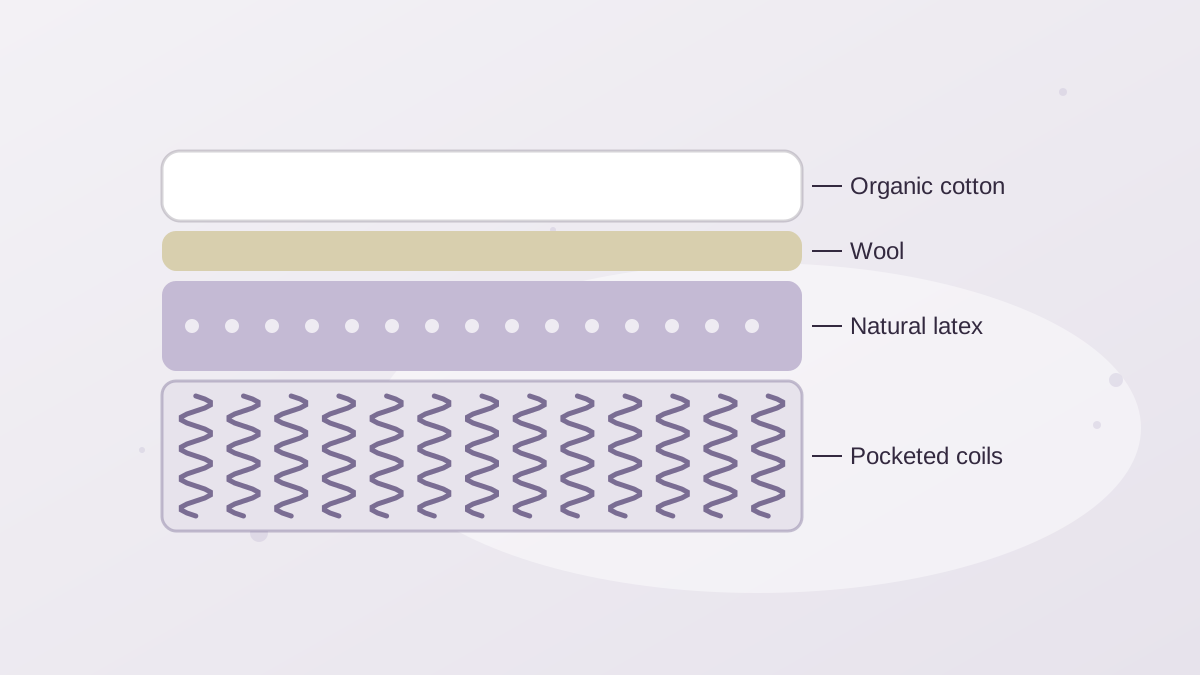
The latex layers then go to the mattress maker, who combines them with the other components. In a latex hybrid, that means placing the latex over a coil unit. In an all-latex bed, it means stacking latex layers of different firmness.
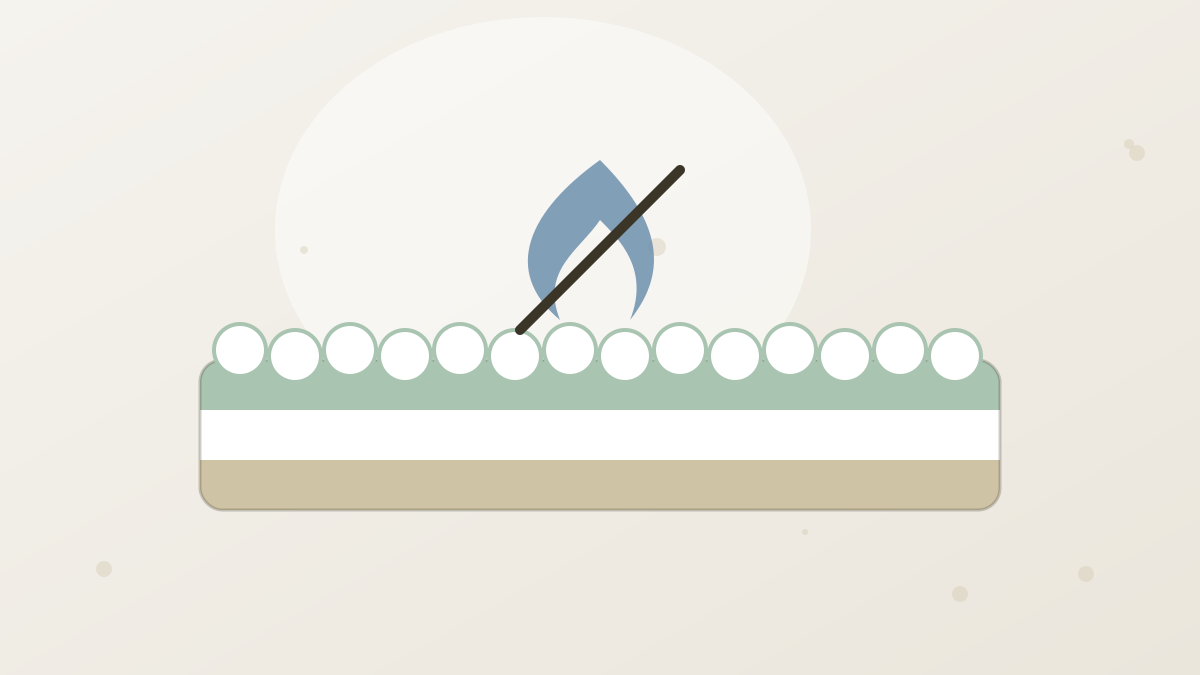
The mattress is then wrapped with a fire barrier, often wool in natural mattresses, and a cover, often organic cotton. Every mattress sold in the US must meet federal flammability standards. Wool lets natural mattresses meet them without chemical flame retardants.
The Eco Terra is handcrafted in Los Angeles, California, from a 3-inch seamless GOLS organic latex layer, fabric-encased coils, a GOTS organic wool fire barrier and a GOTS organic cotton cover. Many boxed mattresses, including the Eco Terra, are then compressed and rolled for shipping.
Quality Differences Between Suppliers
Not all natural latex is made to the same standard. Established suppliers invest in consistent curing, thorough washing, careful drying and quality testing, which produces latex with even firmness and fewer defects. Less careful processing can leave residues, uneven density or weak spots.
That's one reason some brands name their latex supplier. Eco Terra, for example, says its latex comes from Arpico, a single-origin supplier. Certifications such as GOLS and eco-INSTITUT add independent checks on processing and finished-material emissions, which matters because you can't see how latex was made just by looking at a mattress.
Dunlop vs Talalay at a Glance
Table: How the Two Processes Compare | Step | Dunlop | Talalay | |---|---|---| | Molding | Poured into mold or onto belt | Partially filled, sealed mold | | Vacuum | No | Yes, expands latex evenly | | Freezing | No | Yes, flash-frozen | | Consistency | Slightly denser at bottom | Uniform throughout | | Typical feel | Denser, firmer | Lighter, bouncier | | Production cost | Lower | Higher |
Our Dunlop vs Talalay guide covers how each feels to sleep on.
How Certification Fits Into the Process
Certifications follow latex through the supply chain. GOLS covers organic farming practices and processing standards, from plantation to finished latex product. eco-INSTITUT and similar labs test finished materials for emissions and harmful substances. FSC certifies responsible plantation management, which some Talalay suppliers carry.
These certifications help you trust claims about how latex was made, since you can't see the process yourself. Our certifications guide explains each label.
Environmental Footprint
Natural latex has some clear environmental advantages. It comes from a renewable source, rubber trees absorb carbon as they grow, and natural latex is generally considered biodegradable at end of life.
It also has costs. Latex is produced mainly in tropical regions and shipped long distances, and the Talalay process in particular uses significant energy. Organic certification adds standards for farming practices, including limits on synthetic pesticides and fertilizers. Overall, natural and organic latex is usually seen as a lower-impact choice than petroleum-based foams.
Want certified organic latex from a single-origin supplier? Check today's Eco Terra price on the official site.
How Latex Is Made FAQ
Where does natural latex come from?
From the sap of rubber trees, mainly grown in tropical regions. Workers tap the bark and collect the sap by hand.
Is tapping harmful to rubber trees?
When done properly, tapping doesn't harm the tree, which can keep producing sap for many years.
What's the difference between Dunlop and Talalay manufacturing?
Dunlop is poured and baked. Talalay adds vacuum expansion and flash-freezing before baking, producing a more uniform, lighter foam.
Is natural latex 100 percent sap?
No. Small amounts of processing agents are needed to foam and cure it. GOLS requires at least 95 percent certified organic raw material.
Where is Eco Terra's latex made?
Eco Terra says its GOLS-certified organic latex comes from Arpico, a single-origin supplier in Asia. The mattress is handcrafted in Los Angeles.