The Quick Answer
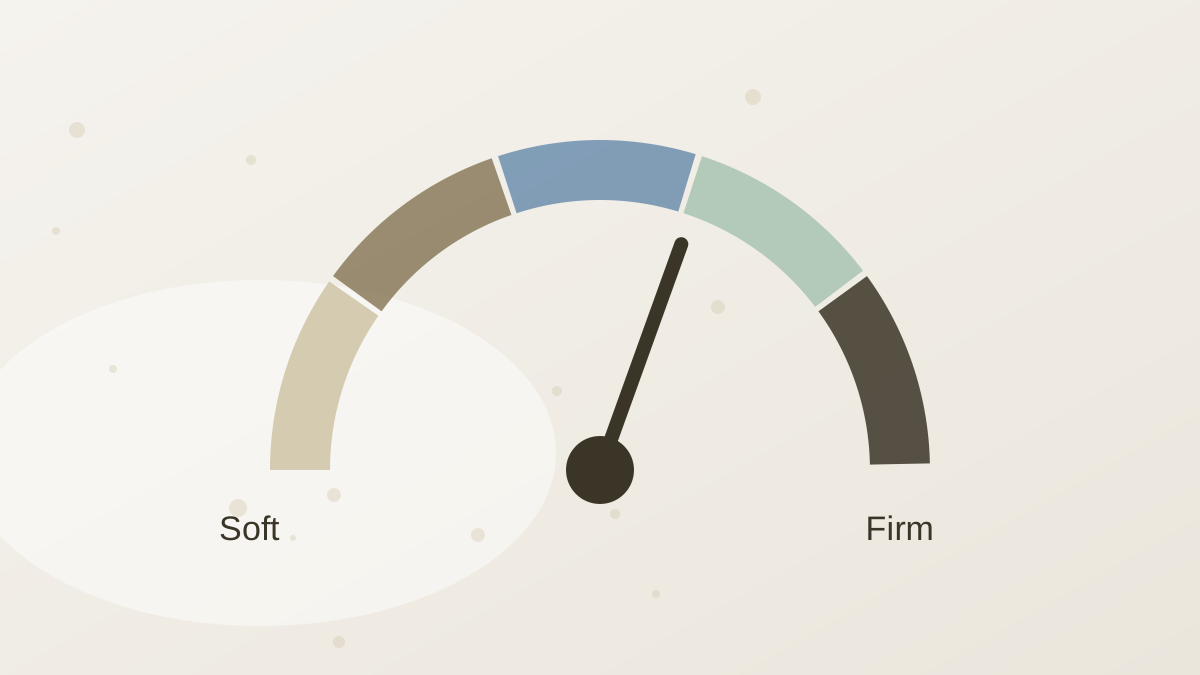
ILD stands for indentation load deflection. It measures how much force it takes to press a piece of foam down by 25 percent of its thickness. The higher the ILD, the firmer the latex. A comfort layer around ILD 19–21 feels soft, around 24–26 feels medium, around 29–31 feels medium-firm and 34 or higher feels firm.
ILD is useful because it gives you a number instead of a vague label like "luxury firm." But it describes one layer, not the whole mattress, and brands don't all measure it the same way. Use it as a guide alongside sleep position, body weight and the trial period.
How ILD Is Measured
In an ILD test, a sample of foam is placed under a round plate, typically about 50 square inches in area. The plate presses the foam down to 25 percent of its original height, and the machine records the force needed to hold it there, measured in pounds. That number is the 25 percent ILD.
So if a latex layer is rated ILD 28, it took about 28 pounds of force to compress a standard sample by a quarter of its thickness. A softer layer gives way with less force. A firmer layer needs more.
You'll sometimes see the term IFD, short for indentation force deflection. In everyday mattress shopping, ILD and IFD are used interchangeably.
A Simple ILD-to-Firmness Chart
Brands describe the ranges slightly differently, but this is a common way to map latex ILD to everyday firmness words.
Table: Latex ILD and Typical Firmness Feel | ILD Range | Typical Feel | Often Used For | |---|---|---| | 14–19 | Very soft to soft | Plush comfort layers, soft toppers | | 19–23 | Soft | Comfort layers for light side sleepers | | 24–26 | Medium | Comfort layers for most side and combination sleepers | | 27–31 | Medium-firm | Comfort layers for back and stomach sleepers | | 32–36 | Firm | Firm comfort layers, transition layers | | 36+ | Extra firm | Support cores in all-latex beds |
Notice where Eco Terra's numbers fall. Its Medium, at ILD 24–26, sits right in the medium band. Its Medium-Firm, at ILD 29–31, sits in the medium-firm band. Those ranges match the way many latex suppliers describe their grades.
Why the Same ILD Can Feel Different
ILD is helpful, but it doesn't tell the whole story. Several things change how a layer feels on your body, even at the same number.
Layer thickness. A 2-inch layer of ILD 24 latex feels firmer than a 4-inch layer of the same latex, because you reach whatever's underneath sooner.
What's underneath. Latex over pocketed coils feels springier and a little softer at the surface than the same latex over a dense latex core.
The cover. A quilted wool cover softens the first touch. A thin, tight cotton cover lets you feel the latex more directly.
Latex type. Talalay and Dunlop at the same ILD can feel slightly different. Talalay often feels lighter and bouncier. Our Dunlop vs Talalay guide explains why.
Your body. Heavier sleepers compress latex more, so a given ILD feels softer to them than to lighter sleepers.
ILD vs Density
Density is a different measurement. It's how much a cubic foot of latex weighs, usually given in pounds per cubic foot or kilograms per cubic meter. In latex, density and firmness tend to rise together, so higher-density latex is usually firmer.
You'll sometimes see latex described by density grade, such as "D65" or "D85," where the number is the density in kilograms per cubic meter. Avocado, for example, describes its comfort latex as D65 with an ILD of 14–19. Density also relates to durability: denser latex generally holds up longer, though both natural Dunlop and Talalay are very durable.
For most shoppers, ILD is the more practical number, because it relates directly to how soft or firm a layer feels.
Matching ILD to Your Sleep Position
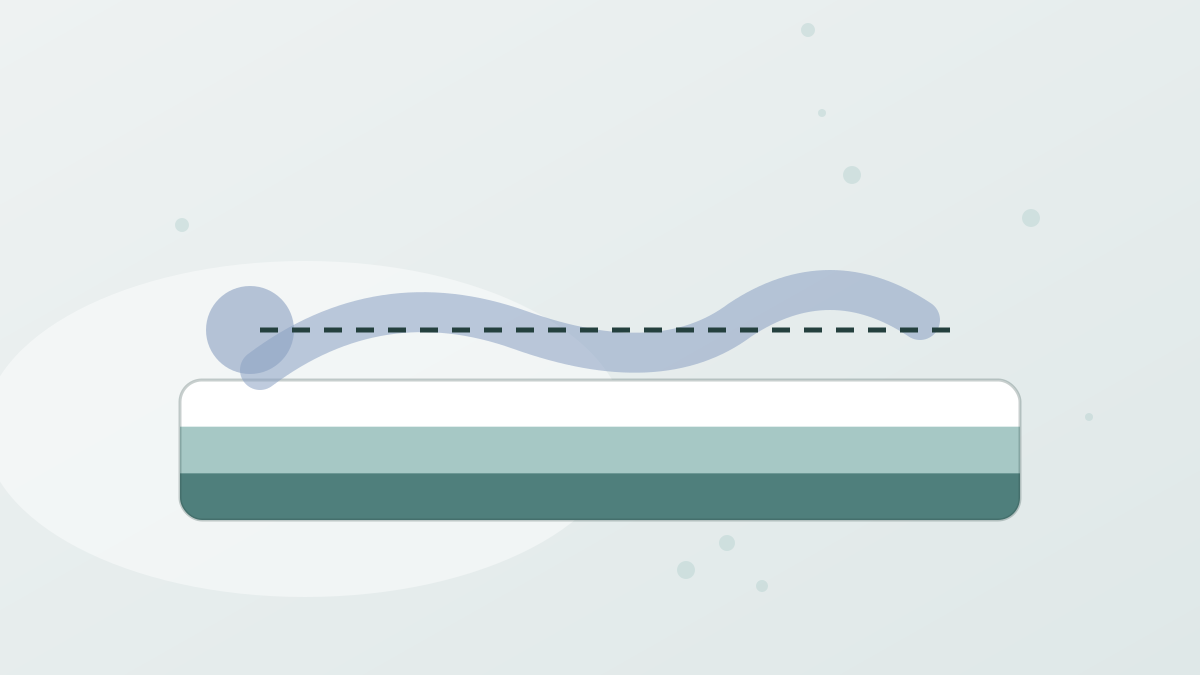
Use these ranges as starting points for the top comfort layer of a latex mattress.
Table: Starting ILD by Sleep Position and Weight | Sleeper | Under 130 lb | 130–230 lb | Over 230 lb | |---|---|---|---| | Side | 19–24 | 22–26 | 24–29 | | Back | 22–26 | 26–30 | 29–33 | | Stomach | 24–28 | 28–32 | 30–35 | | Combination | 22–26 | 24–29 | 27–31 |
For example, a 160-pound side sleeper would start around ILD 22–26. The Eco Terra Medium, at 24–26, fits that well. A 200-pound back sleeper would start around 26–30, so the Eco Terra Medium-Firm at 29–31 is a natural match.
These ranges assume a latex comfort layer of roughly 2 to 4 inches. If you're unsure, start in the middle of your range and rely on the trial period.
Why Brands Report ILD Differently
ILD testing has standard methods, but brands and suppliers don't always use the same sample size, thickness or reporting style. Some report a single number, some a range, and some don't publish ILD at all. Even a range like "24–26" reflects normal variation from batch to batch.
That means comparing ILD across brands is useful for rough positioning but not precise. A brand's ILD 28 might feel close to another brand's ILD 26. ILD is most reliable when you compare options within the same brand, such as Eco Terra's two firmness choices.
ILD for Toppers and Pillows
ILD applies to toppers and latex pillows too, but thickness changes the experience even more. A 2-inch soft topper with ILD 19–21 adds gentle cushioning over a firm mattress. A 3-inch topper at the same ILD makes a bigger change.
When choosing a topper, think about what you want to change. To soften a firm bed, choose a lower ILD than your mattress's top layer. To add a little lift to a slightly soft bed, choose a higher ILD, though a topper can't fix a sagging mattress. Eco Terra's latex topper comes in Soft, Medium and Medium-Firm in 2- or 3-inch thicknesses. Our best latex topper guide compares options.
Firmness Scales vs ILD
Many brands use a 1-to-10 firmness scale instead of ILD, where 1 is the softest and 10 the firmest. Most mattresses sit between about 4 and 7. Roughly speaking:
- 4 to 5 out of 10 often corresponds to soft-to-medium latex comfort layers, around ILD 19–24.
- 5 to 6 out of 10 often corresponds to medium, around ILD 24–28.
- 6 to 7 out of 10 often corresponds to medium-firm, around ILD 28–32.
These conversions are approximate because 1-to-10 scales are subjective. Independent reviewers have described the Eco Terra Medium in roughly the 5 to 6 range, which lines up with its published ILD. Our mattress firmness guide covers the 1-to-10 scale in detail.
When ILD Matters Most
ILD is most helpful when:
- You're choosing between two firmness options from the same brand. It shows how big the difference really is.
- You're replacing or adding a layer. In zippered all-latex beds and toppers, ILD helps you pick the right swap.
- You know what worked before. If you liked a previous latex bed's ILD, you can look for something similar.
It's less helpful when comparing very different designs, such as an all-latex bed against a latex hybrid. There, design matters more than the number.
Common ILD Mistakes to Avoid
Comparing a topper's ILD to a mattress's ILD directly. A thin topper at ILD 28 won't feel like a mattress comfort layer at ILD 28, because it's thinner and sits on a different surface.
Assuming the whole mattress has one ILD. Mattresses have layers, and each has its own ILD. The comfort layer's ILD matters most for how the surface feels, while the support layer's ILD affects how deeply you sink overall.
Choosing the firmest option for "support." Support comes mainly from the core, whether coils or a dense latex base. An overly firm comfort layer can create pressure points without adding meaningful support.
Ignoring your weight. A 120-pound side sleeper and a 240-pound side sleeper won't feel the same ILD the same way.
Treating ILD as the only factor. Cover, thickness, latex type and design all change the feel.
How ILD Changes Over Time
Natural latex holds its ILD well. It may soften slightly during the first weeks as the cells loosen up, which is part of normal break-in. After that, a natural latex layer usually stays close to its original firmness for years if it's protected from moisture, heat and direct sunlight.
Synthetic and blended latex tend to soften more over time, which is another reason natural latex costs more. If a latex mattress feels noticeably softer years later, check your foundation first, since flexing slats can mimic softening. Our latex mattress sagging guide explains how to tell the difference.
Eco Terra's ILD in Practice
Eco Terra publishes ILD for both of its firmness options, which is less common than it should be.
Table: Eco Terra Firmness Options | Option | ILD | Recommended For | Queen Price (Nov 2026) | |---|---|---|---| | Medium | 24–26 | Side sleepers, lighter sleepers, pressure relief | $1,014 | | Medium-Firm | 29–31 | Back, stomach and larger sleepers | $1,019 |
The difference of about 5 ILD points is noticeable but not dramatic. Both sit on top of the same fabric-encased coils, so the support underneath is the same. If you're between the two, think about your main sleep position and body weight. Our Eco Terra Medium vs Medium-Firm guide walks through the decision.
Know which ILD suits you? Check today's Eco Terra Medium and Medium-Firm prices on the official site.
Latex ILD FAQ
What does ILD mean for a latex mattress?
ILD, or indentation load deflection, is the force needed to compress latex by 25 percent. Higher numbers mean firmer latex.
What ILD is medium latex?
Roughly 24 to 26 is a common medium range for a latex comfort layer. Eco Terra's Medium is rated ILD 24–26.
What ILD is best for side sleepers?
Many side sleepers do well in the low to mid-20s. Lighter side sleepers may prefer the high teens to low 20s.
Is higher ILD better?
Not better, just firmer. The right ILD depends on your sleep position, weight and preference.
Can you compare ILD across brands?
Roughly. Testing and reporting vary, so ILD is most reliable when comparing options from the same brand.