The Short Answer
A traditional innerspring mattress uses a unit of steel coils with a thin layer of padding on top. A latex mattress uses natural or synthetic latex foam for comfort, either over coils in a latex hybrid or all the way through.
Innersprings are bouncy, cool and inexpensive, but they often lack pressure relief and wear out faster. Latex adds cushioning and durability while keeping much of the bounce and breathability spring-mattress fans like.
How Each Is Built
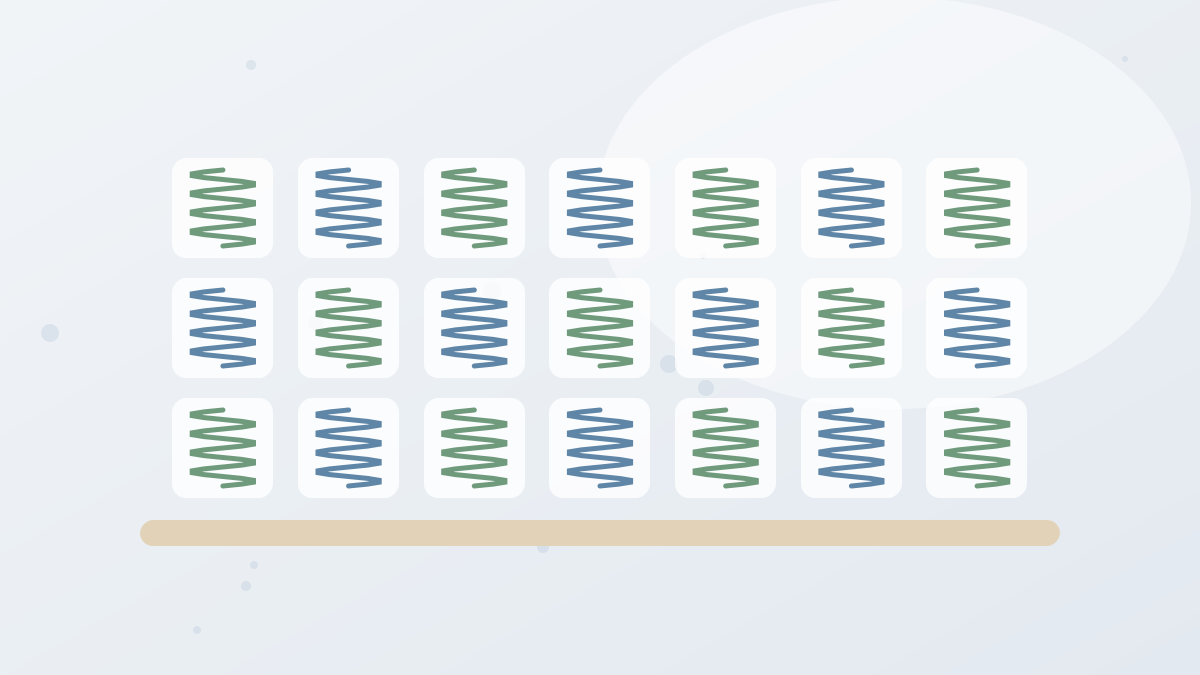
Innerspring mattresses come in a few coil styles. Older and budget models often use connected coils, where springs are wired together. Better models use individually pocketed coils that move independently. On top, innersprings usually have a few inches of padding, such as fiber, foam or a pillow top.
Latex mattresses use latex foam for comfort. A latex hybrid places latex over pocketed coils, while an all-latex mattress uses latex layers for both comfort and support. Our latex hybrid explainer covers the common designs.
How They Feel
Table: Feel Comparison | Trait | Traditional Innerspring | Latex (Hybrid or All-Latex) | |---|---|---| | Bounce | High | Moderate to high | | Pressure relief | Limited, depends on padding | Good, latex contours and pushes back | | Surface | Can feel uneven as padding wears | Smooth and even | | Firmness | Often firm | Ranges from soft to firm | | Noise | Can creak or squeak with age | Quiet |
The biggest change you'll feel is at the surface. Innerspring padding compresses and shifts over time, which can leave you feeling the coils. Latex holds its shape, so the surface stays smooth and supportive.
Support and Pressure Relief
Innersprings support the body through the coils, but their thin comfort layers often don't cushion shoulders and hips well, especially for side sleepers. That's a common reason people wake up sore on an aging spring bed.
Latex fills that gap. It contours lightly to the body, relieving pressure points, then pushes back to keep the spine aligned. In a latex hybrid, you get both: pocketed coils for support and latex for comfort.
Durability and Sagging
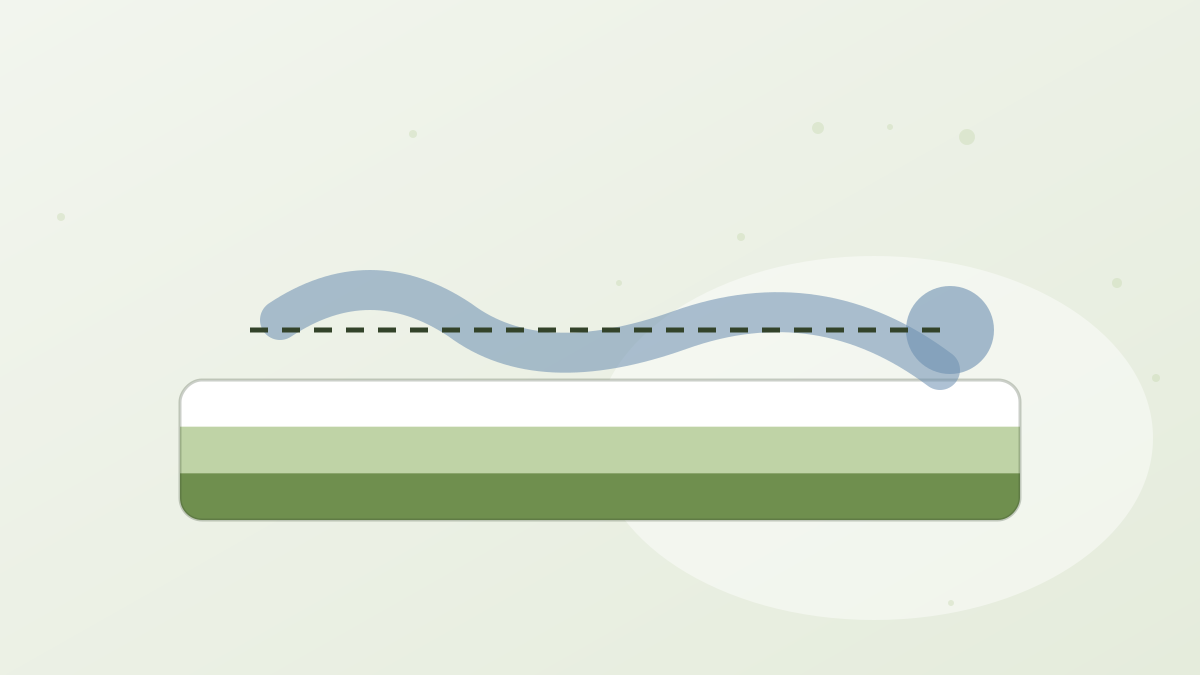
Innerspring mattresses are typically the shortest-lived mattress type. The padding compresses, connected coils lose tension, and body impressions form. Many need replacing after several years.
Natural latex is one of the most durable comfort materials. It resists sagging and holds its shape much longer than fiber padding or low-density foam. That's why many latex mattresses carry long warranties. The Eco Terra, for instance, has a 15-year non-prorated warranty.
Types of Innerspring Coils
Not all spring mattresses are the same, and the coil type explains a lot about how they age.
Bonnell Coils
Hourglass-shaped springs wired together. Common in budget mattresses. Bouncy and cheap, but they transfer motion and can sag.
Offset and Continuous Coils
Variations on connected coils, designed to be sturdier and quieter. Better than Bonnell, still more motion than pocketed coils.
Pocketed Coils
Each spring sits in its own fabric pocket and moves independently. Less motion transfer and better contouring. Most latex hybrids, including the Eco Terra, use these.
If your current mattress uses connected coils, moving to a latex hybrid with pocketed coils changes two things at once: the comfort layer and the coil design. That's why the upgrade often feels dramatic. Our pocketed coils guide explains the difference in more detail.
Cooling
Both sleep cool. Innersprings have lots of open space inside, which lets air move freely. Latex also sleeps cool, especially in hybrid designs where coils provide the same airflow and latex adds a breathable comfort layer.
If you love how cool your spring mattress sleeps, a latex hybrid will feel familiar. An all-latex mattress is still cooler than memory foam but slightly less airy than coils.
Motion and Noise
Traditional connected-coil innersprings transfer a lot of motion, so you feel a partner moving. Pocketed coils reduce that, and latex reduces it further. All-latex mattresses isolate motion best among these options.
Noise is another difference. Aging innersprings can creak and squeak. Latex is silent, and pocketed-coil latex hybrids are typically much quieter than old spring beds.
Edge Support and Weight
Innersprings usually have good edge support, especially models with a steel border wire. Latex hybrids keep that strength with reinforced perimeter coils. All-latex mattresses have softer edges, because latex compresses more without a rigid frame.
Weight is a bigger change. An innerspring is mostly air and steel, so it's relatively light. Latex is dense, so a queen latex hybrid like the Eco Terra weighs about 100 pounds, and all-latex beds can weigh more. Plan for two people when moving or rotating a latex mattress, and make sure your foundation offers solid center support.
Cost
Innerspring mattresses are usually the cheapest type. Latex costs more, because latex is expensive to make, especially natural and organic latex.
Table: Typical Queen Price Ranges | Type | Typical Queen Price | |---|---| | Basic innerspring | Budget to mid-range | | Pocketed-coil innerspring or pillow-top | Mid-range | | Value latex hybrid | Around $1,000 to $1,500 | | Premium latex or all-latex | $1,500 to $3,500+ |
Durability narrows the gap. If a latex mattress lasts significantly longer, its cost per year of use can come close to a cheaper innerspring that needs replacing sooner. The Eco Terra Hybrid Latex queen was $1,014 in November 2026, which works out to about $101 a year over ten years. Our latex mattress cost guide does more of this math.
Which Sleepers Benefit Most From Switching?
Side Sleepers
Latex. Its pressure relief cushions shoulders and hips better than innerspring padding.
People With a Sagging Spring Bed
Latex. It resists body impressions far longer.
Hot Sleepers Who Love Springs
Latex hybrid. It keeps coil airflow and adds a breathable comfort layer.
Couples
Latex hybrid or all-latex. Both reduce motion compared with connected coils.
Tight Budgets
Innerspring, if cost is the main factor. A latex topper on a decent spring bed is a budget middle ground.
Eco-Minded Shoppers
Natural or organic latex. Many innersprings use synthetic foams in their padding.
The Budget Middle Ground: Latex Topper
If your innerspring still has good support but feels hard or lumpy on top, a latex topper can add years of comfort for much less than a new mattress. It won't fix sagging coils, though. If the bed dips or creaks, the support is failing and a topper won't solve it.
Our topper vs new mattress guide explains how to tell the difference, and our when to replace your mattress guide lists the warning signs.
Upgrading From Springs to Latex
If you're ready to replace an innerspring, a latex hybrid is the easiest transition, since it keeps the coil support and bounce you know. The Eco Terra Hybrid Latex pairs 3 inches of GOLS organic latex with wrapped coils, organic wool and an organic cotton cover, with no polyurethane foam. Its Medium-Firm option feels closest to a supportive spring bed, and its Medium adds more cushioning for side sleepers.
Ready to upgrade from springs? Check today's Eco Terra Hybrid Latex price on the official site.
Latex vs Innerspring FAQ
Is latex better than innerspring?
For pressure relief, durability and quiet, latex usually wins. Innersprings cost less and feel very bouncy and cool.
Does a latex mattress feel like a spring mattress?
A latex hybrid comes close, since it uses coils underneath. All-latex feels bouncy but more uniform and grounded.
Which lasts longer?
Latex generally lasts much longer than a traditional innerspring, whose padding and coils wear faster.
Are latex mattresses noisy?
No. Latex is silent, and latex hybrids with pocketed coils are typically much quieter than older spring beds.
Can you put a latex topper on an innerspring?
Yes. It's a good way to add comfort to a spring bed that still has solid support, but it won't fix sagging.
Make the Upgrade That Fits
If cost is everything, an innerspring still makes sense. But if you want better pressure relief, a quieter bed and a mattress that holds up for years, latex is the upgrade. A latex hybrid gives spring lovers the best of both.
See the current Eco Terra price and choose Medium or Medium-Firm.